MIG arcs require higher heat protection and fume management due to higher amperage and wire feed. TIG arcs demand tighter face protection and better respiratory control. Selecting welding safety gear by process prevents overbuying heavy gear for low-heat work or underprotecting high-current tasks.
- MIG welding requires more heat protection because the arc is brighter and the workpiece runs hotter.
- TIG welding requires tighter face shielding and better fume control due to concentrated heat and tungsten electrode use.
- Match PPE to the process, not just the material, to avoid overpaying for unused heavy gear.
- A single shop may need two PPE kits: one for MIG production and one for TIG finishing.
- Reassess gear when amperage, fume extraction, or work area changes.
Why the same arc does not need the same protection
MIG and TIG both create an arc, but the two processes stress the operator’s body in different ways. MIG runs at higher amperage and feeds a continuous wire. The arc is broader, brighter, and throws more spatter. A typical MIG setup on thin sheet can look deceptively clean, but the heat input into the joint and the metal splash are enough to burn through a thin glove or damage a face shield if the angle is wrong.
TIG runs at lower amperage for most common plate thicknesses and does not feed wire. The arc is a small, stable point. The operator can stand closer to the work because the heat is concentrated. That proximity creates a different problem. The arc is easier to see, but the UV and IR output is intense over a small area. If the face shield is too low a shade or has a small viewing window, the operator can take eye damage from a single pass.
The practical difference is that MIG PPE is about heat management and impact protection. TIG PIG PPE is about eye protection precision and respiratory control. Mixing the two up wastes money and creates false confidence. A worker wearing heavy MIG gloves for TIG work moves slower and loses dexterity. A worker wearing a basic MIG face shield for TIG work risks eye injury because the viewing area is not shaped for the tight focus needed.
Heat exposure and what it forces in the PPE stack
The first PPE layer is body protection. MIG arcs produce spatter. Spatter is molten metal that flies in random directions. The distance can be short, but the energy is high. A small droplet can land on skin and cause a burn that looks minor until it deepens.
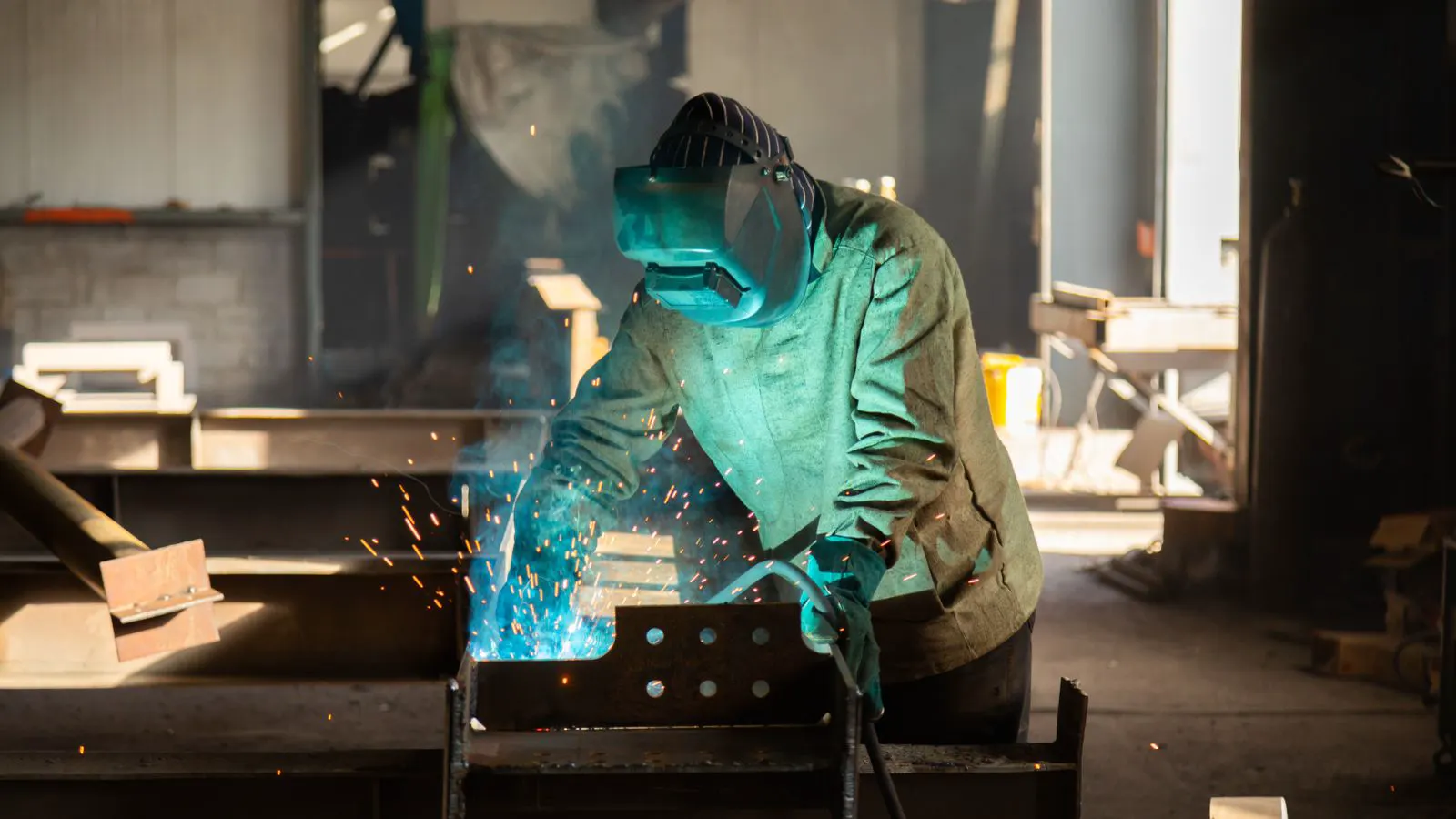
For MIG, the standard body PPE is a leather or flame-resistant jacket, leather gauntlets, and long pants. The gauntlets matter more than most buyers expect. The fingers are close to the work, and a droplet can land on the thumb or index finger while feeding the wire. A thin leather glove is not enough for continuous MIG work. The gauntlet should extend to the forearm and have a reinforced knuckle.
TIG work produces far less spatter. The arc is stable, and the filler rod is held in a holder rather than fed by a gun. The heat is local. The body can be protected with a lighter jacket or even a flame-resistant shirt if the amperage is low and the fume extraction is good. The gloves for TIG are usually thinner, with better dexterity. They are leather or a heat-resistant synthetic that allows the operator to hold the filler rod steady for long periods.
This is where budget optimization starts. If a shop runs mostly TIG on thin sheet or aluminum, buying heavy MIG gauntlets for every worker is unnecessary. The cost per pair is high, and the weight slows the operator down. The same is true for face shields. A heavy, full-face MIG shield is overkill for TIG.
Face shield selection for different arc shapes
The face shield is the single most common point of failure in PPE selection. MIG arcs are wide and bright. They produce more UV and IR across a larger area. The face shield needs a larger viewing window and a shade number that matches the amperage. For MIG, the viewing area should be wide enough that the operator can see the joint without tilting their head. A small window forces the operator to lean closer, which increases the risk of spatter landing on the face.
TIG arcs are small and focused. The operator needs a precise view of the tungsten tip and the filler rod. A wide viewing window is less useful because the operator is already close. What matters is the shade number and the shape of the window. A TIG face shield often has a smaller, more rectangular viewing area. This keeps the operator’s eyes aligned with the arc without needing to move their head.
The shade number is not a one-size-fits-all choice. MIG at higher amperage requires a higher shade. TIG at low amperage can run with a lower shade. If the shade is too low, the arc is painful to look at and the operator blinks, breaking the bead. If the shade is too high, the operator cannot see the puddle and the joint quality drops.
A practical check is to have the operator stand at their normal working distance and look at the arc through the shield for a few seconds. If they squint or feel a burning sensation, the shade is too low. If they cannot see the color of the puddle, the shade is too high. This check is faster and more accurate than guessing from an amperage chart.
Respiratory protection and fume exposure
The respiratory layer is where MIG and TIG diverge most sharply. MIG produces more fume volume because of the wire feed and the higher heat input. The fume cloud is larger and stays in the air longer. TIG produces less total fume, but the cloud is concentrated near the arc and is harder to clear without good local extraction.
For MIG, respiratory protection is usually a powered air-purifying respirator or a half-mask respirator with P100 or equivalent filters. The half-mask works well when the fume volume is moderate and the extraction is good. It is lighter and cheaper to maintain. A powered air-purifying respirator is better for high-amperage MIG on thick plate, where the fume load is high and the operator is working for long periods.
For TIG, the fume volume is lower, but the concentration is higher. A half-mask with P100 filters is often enough for intermittent TIG work. For continuous TIG on aluminum or stainless steel, a powered air-purifying respirator is a better choice. The reason is not the total fume, but the duration and the proximity. The operator is close to the arc for longer, and the fume does not disperse as quickly.
The fume extraction system works with the respirator. A good extraction system reduces the need for high-capacity respiratory gear. If the extraction is poor, the respirator has to work harder and the filters clog faster. This is where the cost of PPE and the cost of extraction are linked. Buying a cheap respirator and a good extraction system is usually cheaper than buying an expensive respirator and a poor extraction system.
The table: matching PPE to process
| Option | Best for | Limitations |
|---|---|---|
| Heavy MIG PPE: leather gauntlets, full face shield, P100 respirator | High-amperage MIG on thick steel, structural work, outdoor conditions | Too heavy for TIG, reduces dexterity, higher cost per worker |
| Light TIG PPE: thin leather gloves, small-view face shield, P100 half-mask | Low-amperage TIG on thin sheet, aluminum, stainless, indoor finishing | Not enough heat protection for high-amperage MIG, less fume capacity |
| Hybrid PPE: medium leather gauntlets, adjustable face shield, powered air-purifying respirator | Shops that run both MIG and TIG on the same workstations | Higher initial cost, requires regular filter changes, heavier than light TIG kit |
| Process-specific kits: separate MIG and TIG PPE sets | Shops with dedicated stations for each process | Double the PPE inventory, requires clear labeling and training |
| Minimal PPE: basic gloves, low-shade face shield, no respirator | Very low-amperage TIG on thin material with excellent fume extraction | Dangerous for anything above low amperage, not suitable for MIG |
When to pick each configuration
The heavy MIG PPE setup is for the jobs where the arc is not going away. It is the default for structural welding, pipe welding, and any work where the operator is working for hours at a time. The cost is higher, but the risk is also higher. A burn on the forearm from a MIG spatter can take weeks to heal. A damaged face shield from a high-amperage arc can cause permanent eye damage. The heavy PPE is not a luxury. It is the baseline for high-energy work.
The light TIG PPE setup is for the jobs where the arc is small and the work is precise. It is the default for thin sheet work, aluminum, stainless, and any TIG job where the operator needs to hold the filler rod steady for long periods. The cost is lower, and the dexterity is better. The risk is lower, but it is not zero. A TIG arc can still burn the eye if the shade is wrong. The light PPE assumes the fume extraction is working well.
The hybrid PPE setup is for shops that cannot separate the processes. It is the most common configuration in small workshops. The operator wears one set of PPE for all work. The cost is in the middle. The trade-off is that the PPE is not optimal for either process. The gauntlets are too heavy for TIG, and the face shield is not precise enough for low-amperage work. It is a compromise. It works, but it is not the best fit.
The process-specific kit setup is for shops that have the space and the discipline. Each worker has two PPE sets. One for MIG, one for TIG. They switch when the process changes. The cost is higher, but the fit is better. The operator is not fighting the gear. The MIG kit is heavy and protective. The TIG kit is light and precise. This setup requires clear labeling and training so that workers do not mix up the kits.
The minimal PPE setup is for low-risk work. It is not for production welding. It is for occasional TIG on thin material where the fume extraction is excellent and the amperage is low. Even then, it is a narrow case. Most shops should not default to minimal PPE.
Reassessing PPE when the work changes
PPE is not a one-time purchase. It changes with the work. If a shop moves from thin sheet MIG to thick plate MIG, the PPE needs to change. The face shield shade goes up. The gauntlets get thicker. The respirator filter changes. If a shop adds TIG on stainless steel, the fume load increases and the respirator may need to upgrade.
The most common mistake is buying PPE once and never changing it. The gear gets worn. The filters clog. The face shield cracks. The gloves thin out. A worn glove is not a glove. It is a risk. The PPE should be inspected regularly. The face shield viewing window should be checked for scratches. The respirator filters should be replaced on a schedule, not when they are obviously dirty. The gloves should be replaced when the leather is thin or the stitching is loose.
The budget for PPE is not a one-time cost. It is a recurring cost. The filters, the face shield replacements, and the glove replacements add up. The initial purchase is only part of the total cost. A cheaper PPE set that needs replacement every three months is more expensive than a higher-quality set that lasts two years.
The final point is that PPE selection is a management decision, not just a safety decision. The shop decides which processes run, which amperages are used, and which fume extraction is in place. The PPE must match that decision. If the decision changes, the PPE changes. If the decision is wrong, the PPE is wrong. The goal is not to buy the most expensive PPE. The goal is to buy the right PPE for the work that is actually being done.
Frequently asked questions
Can I use the same face shield for MIG and TIG?
You can, but it is not optimal. A MIG face shield has a wide viewing window that is not precise enough for TIG. A TIG face shield has a small viewing window that is not wide enough for MIG. A hybrid shield with an adjustable window works for both, but a dedicated shield for each process is better.
Do I need a respirator for TIG if the fume extraction is good?
For low-amperage TIG with excellent extraction, a half-mask respirator with P100 filters is usually enough. For continuous TIG or high-amperage TIG, a powered air-purifying respirator is a better choice. The fume concentration near the arc is higher than in MIG, even if the total volume is lower.
Are heavy MIG gloves a problem for TIG work?
Yes, they reduce dexterity. TIG requires steady filler rod placement. Heavy gauntlets make the hand feel bulky and slow. The operator is more likely to drop the rod or lose control of the bead. Thin leather gloves or heat-resistant synthetic gloves are better for TIG.
How do I know if my face shield shade is correct?
Stand at your normal working distance and look at the arc through the shield for a few seconds. If you squint or feel a burning sensation, the shade is too low. If you cannot see the color of the puddle, the shade is too high. This check is faster and more accurate than guessing from an amperage chart.
Should I buy PPE for the worst-case scenario or the typical case?
Buy PPE for the typical case, and have a backup for the worst-case scenario. The typical case is what the operator wears daily. The worst-case scenario is what the operator has available for high-amperage work or outdoor conditions. This keeps the daily PPE light and the backup PPE ready when needed.