Selecting the right stainless steel welding wire starts with identifying the base metal grade. Match the filler to the substrate and service conditions. Use ER308L for common austenitic steel and ER316L when corrosion resistance is needed.
- Match the filler metal grade to the base metal grade for compatible welds
- Use lower carbon grades like L series when reducing sensitization risk is required
- Consider service environment and corrosion resistance when choosing between common grades
- Verify wire specifications against project requirements before purchasing
- Keep consumables dry and protected from moisture during storage and use
Identify the base metal grade first
The first step in welding wire selection is confirming what you are actually welding. Stainless steel is not one material. It is a family of grades with different alloy compositions, mechanical properties, and corrosion behaviors. The weld must be compatible with the base metal, not just similar in appearance.
Start by reading the mill certificate or the marking on the plate. The number on the material tag tells you the grade. If the plate is marked 304 or 316, you have your starting point. If the material is unknown, do not guess. Send a sample to a lab or use a portable spectrometer if one is available.
A common mistake is assuming that any stainless wire will work on any stainless plate. This is wrong. The chemistry of the filler determines the strength, corrosion resistance, and appearance of the joint.
Match the filler grade to the base metal
For most austenitic stainless steel projects, you will choose between a few standard grades. The rule is simple. The filler metal should have the same or higher alloy content as the base metal. This keeps the weld metal chemically compatible.
ER308L is the most common choice for welding 304 stainless steel. The L designation means low carbon. Low carbon reduces the risk of sensitization, which is when chromium binds to carbon at the weld heat affected zone. That leaves the area vulnerable to corrosion.
ER316L is the standard filler for 316 stainless steel. It contains molybdenum, which improves resistance to pitting and chloride attack. If you weld 316 with a filler that lacks molybdenum, you reduce the corrosion resistance of the joint.
There is also ER309, which is a higher alloy filler used when welding dissimilar stainless steels together. If you are joining 304 to 316, or welding with unknown chemistry, ER309 can be a useful bridge. But for matching like-to-like, stay with the base grade.
How carbon levels affect sourcing decisions
The letter after the grade number matters. ER308 and ER308L look similar on a spec sheet, but they behave differently in service.
The L grades have restricted carbon content. This makes them the default choice for thin sheet, sensitization sensitive applications, and service conditions where corrosion resistance matters. Most modern stainless welding uses L grades.
The non L grades have higher carbon. They can produce harder weld metal. That can be useful in some structural or high strength applications, but it increases the risk of intergranular corrosion.
When sourcing, specify the exact grade. Do not just say stainless wire. Tell your supplier the grade, the wire diameter, and the required specification. A spec sheet should be available for the lot. Check the chemical analysis against your project requirements.
Compare common grades for different applications
The table below shows how the main grades differ in practice.
| Wire Grade | Base Metal Match | Key Feature | Typical Use |
|---|---|---|---|
| ER308L | 304, 304L | Low carbon, no molybdenum | General purpose, thin sheet, food contact |
| ER316L | 316, 316L | Low carbon, molybdenum | Marine, chemical, chloride environments |
| ER309L | Dissimilar, 404 | High alloy, low carbon | Transition welds, unknown base metal |
| ER304L | 304L | Low carbon, lower alloy | Cost sensitive, light structural |
| ER317L | 316, 321 | High molybdenum, high nickel | Severe corrosion, high strength |
This is not an exhaustive list. It covers the grades you will see most often in commercial and industrial work.
Use the right wire diameter for your thickness
Wire diameter affects heat input, deposition rate, and operator control. It is part of welding wire selection because the wrong diameter creates a poor joint even if the chemistry is correct.
Thin sheet, roughly 1 to 3 millimeters, usually calls for a finer wire. Thinner wire deposits less heat per pass. It is easier to control on small pieces. A 0.8 or 1.0 millimeter wire is common here.
Thicker plate, 6 millimeters and up, benefits from a larger diameter. More mass deposits faster. The operator can cover long runs with less travel time. 1.2, 1.6, or 2.0 millimeter wire is typical for structural work.
For gas metal arc welding, the wire diameter must match the machine and the gas flow. A wire that is too thick for the machine struggles to feed smoothly. A wire that is too thin may not build up enough metal in a single pass.
Worked example: A marine bracket repair
Imagine a bracket made from 316 stainless steel that has been exposed to salt water. The plate is 3 millimeters thick. The joint is a fillet weld on the edge.
Step one is confirming the grade. The plate is marked 316. The service is marine. The thickness is light.
Step two is choosing the filler. ER316L is the direct match. It has the molybdenum content needed for chloride resistance. The L designation keeps carbon low, which protects against sensitization on a thin section.
Step three is choosing the diameter. At 3 millimeters thick, a 1.0 or 1.2 millimeter wire gives good control. It deposits enough metal without overheating the thin plate.
Step four is setting the process. Use gas metal arc welding with a shielding gas suited to stainless steel. Keep the travel speed steady. Avoid excessive heat. The goal is a smooth bead with minimal distortion.
This is a standard repair. The same logic applies to new fabrication. Confirm the grade, match the filler, pick the right diameter, and set the parameters.
Check the consumables and storage
Wire selection is not just about the grade. The physical condition of the wire matters. Stainless wire is sensitive to contamination.
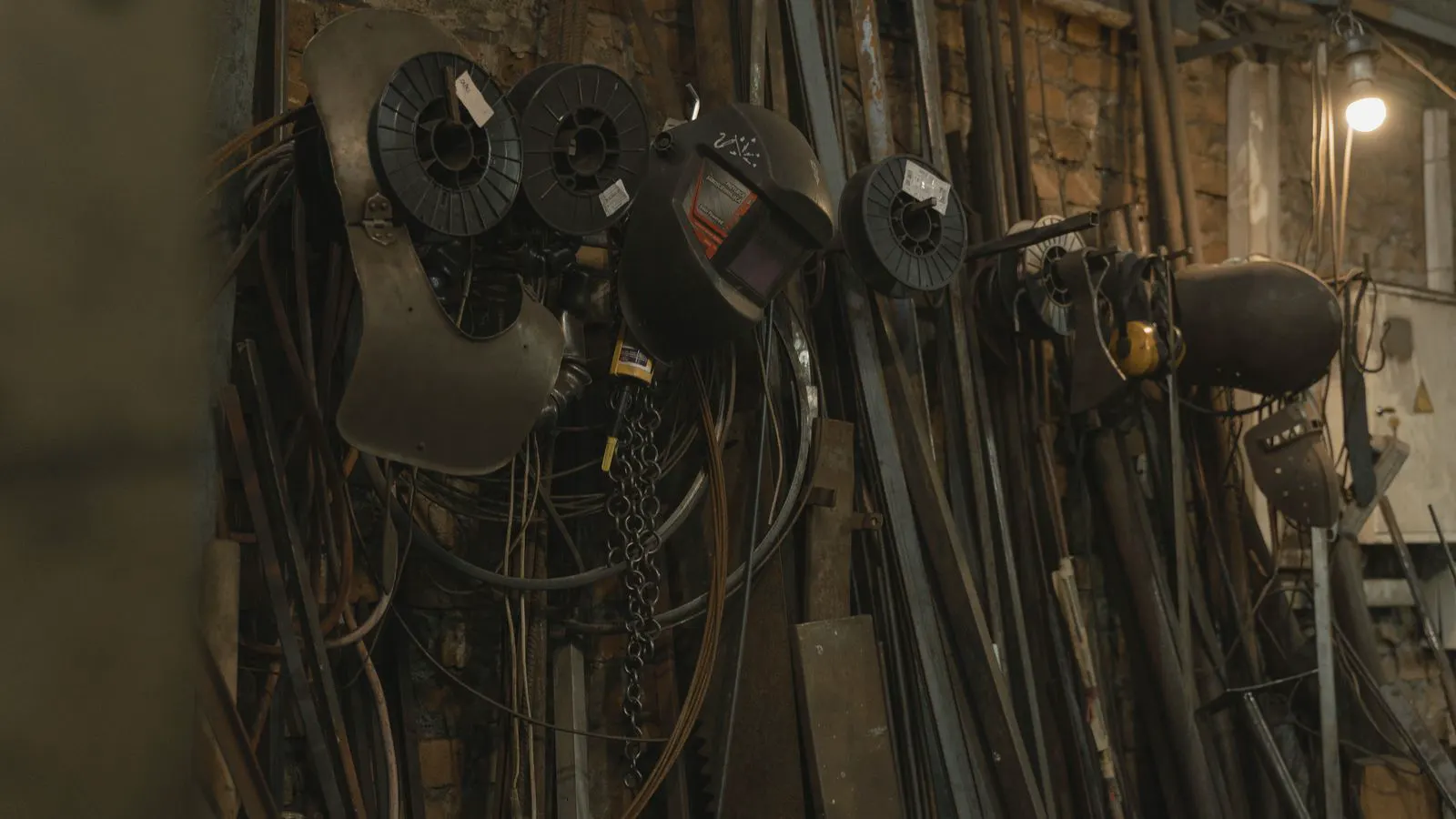
Store the spools in a dry area. Do not leave them on the floor where they can collect moisture or oil. Use a new spool for each job if the previous one was exposed to rain or condensation.
Inspect the wire before use. If the surface is discolored, scratched, or has rust spots, it is likely contaminated. Contaminated wire causes porosity and weak welds. The chemistry may be correct, but the surface condition will ruin the joint.
If you are using a large spool, pay attention to the pay-off direction. The wire should unwind without twisting. A twisting wire feeds unevenly and can cause arc instability.
Verify with the specification
Before you cut the first bead, check the documentation. The project specification should state the required filler metal. Read it. Confirm the grade, the form, and the required test results.
If the spec is silent, use engineering judgment. Match the base metal. Consider the service. When in doubt, ask the designer. A wrong wire choice is expensive to fix. It can mean grinding, rewelding, and in some cases, discarding the part.
Keep the wire specification with the project files. If the joint fails later, you need to know exactly what was used and under what conditions.
Common mistakes to avoid
The most common error is using the wrong grade. People reach for ER308L because it is cheap and available. They do not check the base metal. If the plate is 316, the weld will not have the corrosion resistance it needs.
Another mistake is ignoring the carbon level. Using a non L grade on thin sheet increases the risk of sensitization. The weld may look fine, but it will corrode faster in service.
A third mistake is poor storage. Wire that has been exposed to moisture will cause porosity. The arc will look spotty. The weld will be weak.
Finally, do not mix and match without a plan. If you are welding dissimilar steels, use a filler designed for transition. Do not improvise with a wire that was not selected for that purpose.
Final checks before welding
Before you start, confirm three things. The base metal grade is identified. The filler grade is selected and matches the spec. The wire diameter is appropriate for the thickness and process.
Check the wire surface. Check the storage conditions. Check the shielding gas. These are the details that separate a good weld from a defective one.
Welding wire selection is a discipline. It is not a guess. Match the chemistry. Respect the service conditions. Use the right physical form. The joint will hold up because you made the right choice from the start.
Frequently asked questions
Can I use ER308L to weld 316 stainless steel?
It is not recommended for long term service. The weld will lack the molybdenum content needed for full corrosion resistance. Use ER316L for 316 base metal.
What is the difference between ER308 and ER308L?
The L grade has lower carbon content. This reduces the risk of sensitization and intergranular corrosion. Use the L grade for most stainless steel work.
How do I know what grade of stainless steel I have?
Check the mill certificate or the marking on the material. If the marking is missing or unclear, use a portable spectrometer or send a sample to a lab.
Can I use stainless wire for dissimilar steel joints?
Yes, but you need the right filler. ER309L is a common choice for joining dissimilar austenitic steels. It has higher alloy content to bridge the chemistry gap.
Does wire diameter affect corrosion resistance?
No. Diameter affects heat input and deposition. Corrosion resistance depends on the alloy composition of the filler and the base metal.