Robotic welding systems often beat manual TIG on volume and repeatability, but manual TIG wins on complex, low-volume joints. The right choice depends on part count, material mix, and required quality.
- Robotic welding systems reduce labor cost per part once a minimum production volume is reached.
- Manual TIG welding handles complex geometries and one-off repairs that fixed robots cannot reach.
- Welding robot selection requires a clear definition of joint design, material thickness, and position changes.
- Automation for welding is most effective when the process is stable and the part count is high.
- Hybrid setups can combine manual inspection or finishing with robotic deposition for better ROI.
Does automation pay off for TIG work?
The answer depends on part volume and joint complexity. A robotic welding system handles repetitive beads well, but it struggles with joints that require constant repositioning or visual judgment. Manual TIG allows an operator to read the puddle, adjust travel speed, and manage heat input on the fly. If the same joint repeats hundreds of times, the robot wins on consistency and labor cost. If the joint changes every cycle, the manual worker often wins on setup time and flexibility.
Consider a production line for stainless steel exhaust manifolds. The joints are identical, and the parts are clamped in a rigid fixture. A robot can weld the bead with a tolerance measured in millimeters. The cost per part drops as volume increases, and the labor cost is predictable. Now consider a batch of aerospace brackets made from a mix of aluminum and titanium. The joint angles vary slightly between batches, and the welder must watch the color of the puddle to avoid burn-through. A robot would require extensive reprogramming for each change in angle. A skilled manual welder can adjust the arc length and travel speed in real time. The manual process is slower, but it avoids the high setup costs of reprogramming a robot for low-volume, high-mix work.
How do the two methods compare?
The table below outlines the main trade-offs when comparing a fixed or articulated robotic welding system against a manual TIG process.
| Option | Best for | Limitations | |
|—|—|—|
| Fixed robotic welding system | High-volume, fixed-position joints, automotive, and structural parts | Limited reach, requires high precision in fixturing, high capital cost |
| Articulated robotic welding system | Multi-axis work, complex geometries, and varied part orientations | More complex programming, higher maintenance, larger footprint |
| Manual TIG welding | Low-volume work, complex curves, repairs, and multi-material joints | Labor dependent, slower cycle time, operator fatigue, variable quality |
| Manual TIG with tacking and robotic finishing | Mixed production, where initial positioning is critical but final beads are standardized | Requires two skilled operators or a shift change, slower overall throughput |
| Manual TIG with visual inspection and robotic deposition | High-value parts where quality is critical but part volume is moderate | Higher labor cost than full automation, requires trained inspectors |
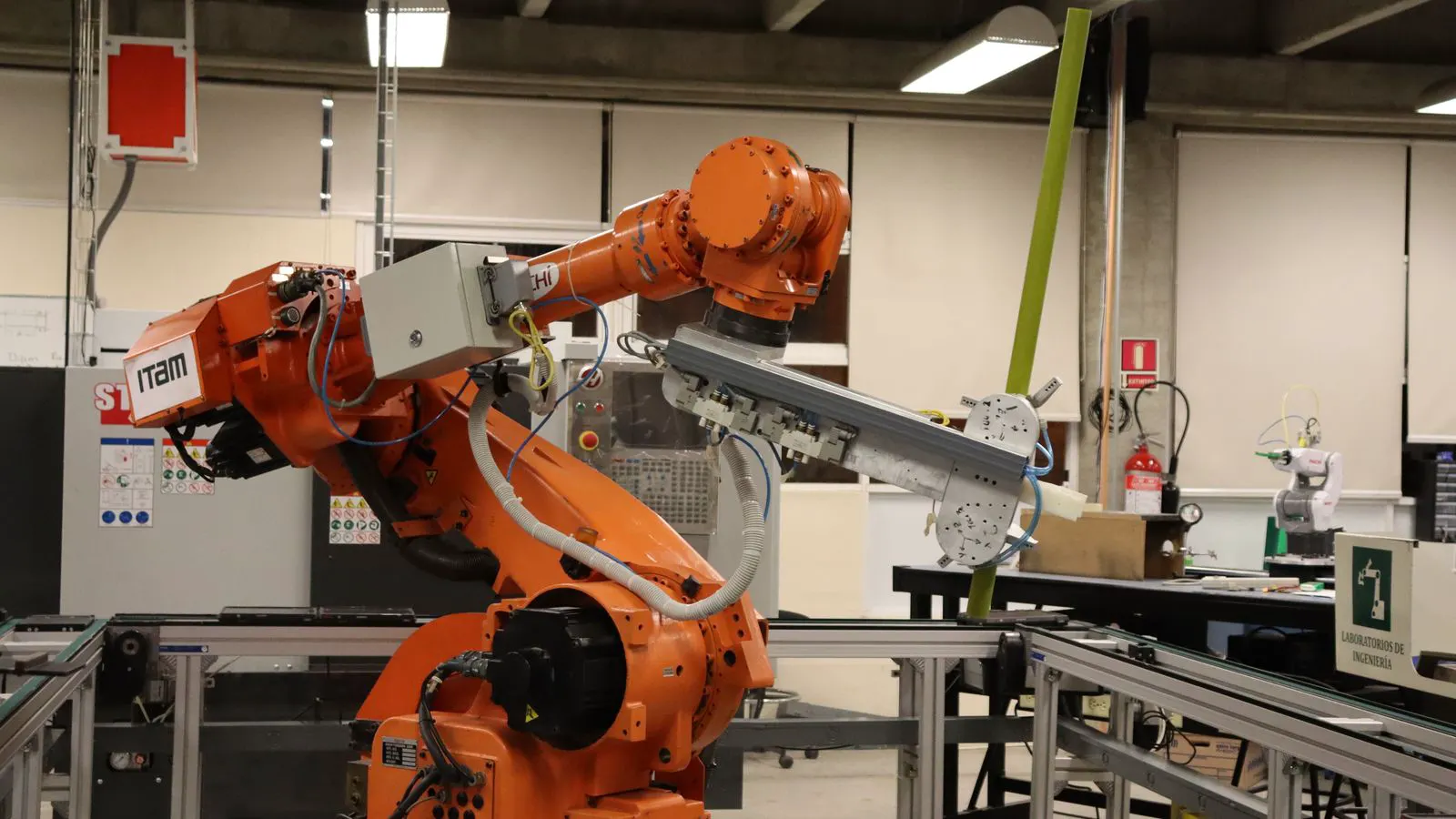
A fixed robot, often called a gantry or single-axis system, is ideal when the part sits in one position and the torch moves in a straight line or a simple curve. It is common in automotive plants for spot welding or long straight seams. The limitation is reach. If the part is larger than the robot’s working envelope, you need multiple robots or a moving fixture. An articulated robot, with five or six axes, can move the torch in three dimensions. It can work around curved surfaces and access joints from multiple angles. This flexibility comes at a cost. The programming is more complex, and the maintenance requirements are higher because there are more moving joints.
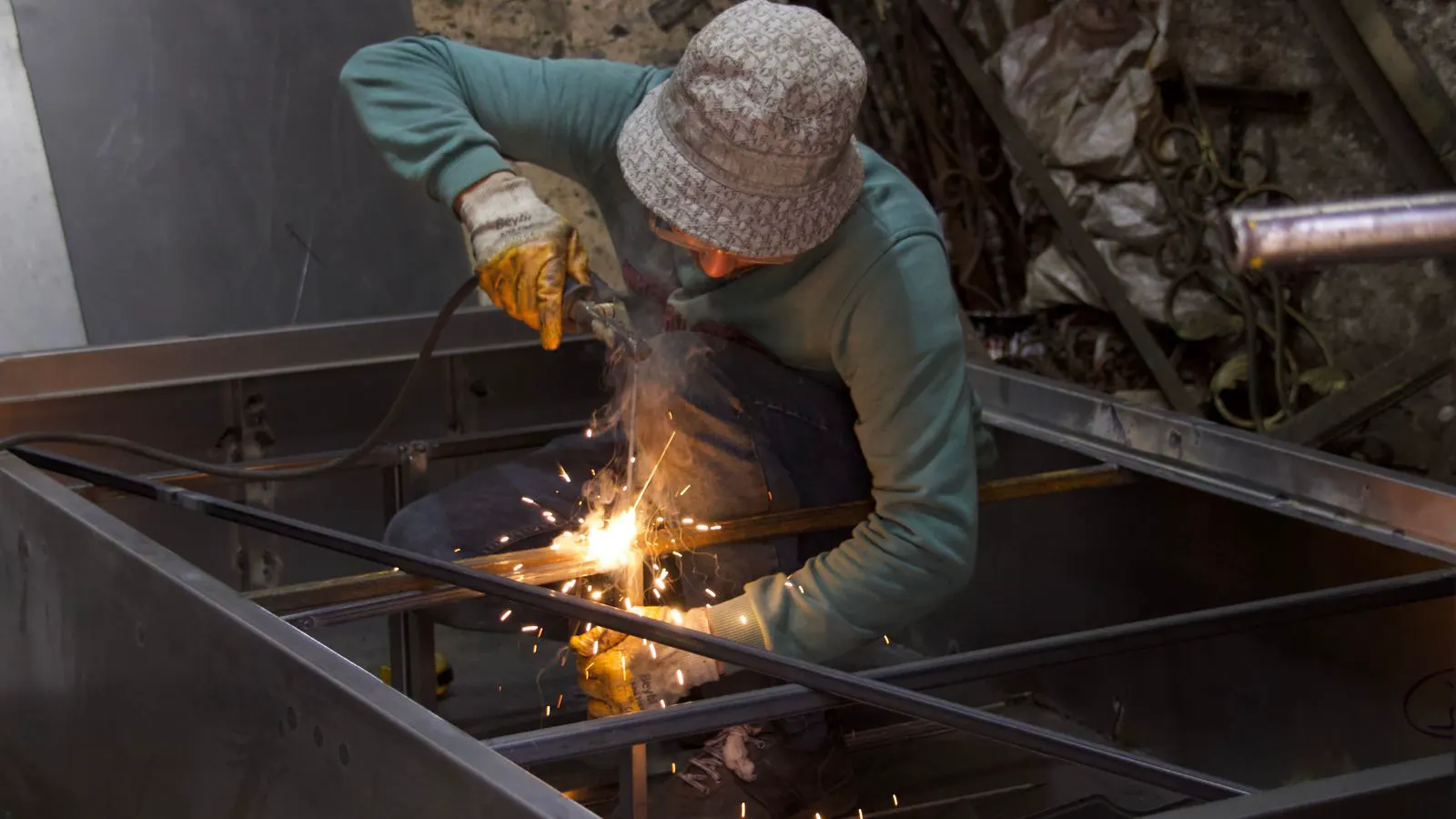
Manual TIG remains the standard for repair work, small batch production, and complex geometry. The welder’s hands are the most precise tool available for adjusting the arc. However, the process is labor intensive. A single welder can only work on one joint at a time, and fatigue sets in after several hours of intense focus. The quality of the weld depends heavily on the operator’s skill level and their ability to maintain a consistent hand position.
When does a robot make financial sense?
The break-even point for automation for welding usually appears after a certain number of parts. The robot pays for itself through lower labor cost per part and more consistent cycle times. However, the initial cost includes the robot, the controller, the welding power source, the work cell, safety fencing, and programming time.
For TIG welding, the power source and torch design matter. A robot TIG torch must handle the heat and the arc stability of the process. The robot controller must be able to handle the slow travel speeds typical of TIG. A fast robot designed for MIG or laser welding may not be the right fit for TIG because the programming and motion profiles differ.
If you weld 1,000 identical parts per month, a robot is likely to save money on labor and reduce rework. If you weld 50 parts per month with varying sizes, a manual TIG welder is usually more economical. The key metric is the cost per part, not just the cost of the robot.
To calculate the break-even point, you need to account for all costs, not just the robot itself. The initial investment often includes the welding controller, which must support the specific TIG process, and the work cell, which includes the fixture and safety interlocks. Programming time is a hidden cost. A new robot may require weeks of programming to get the torch height and travel speed just right. If the part design changes, the programming must be updated, which adds to the total cost of ownership.
Consider a scenario where a company produces 500 parts per week. Each part requires 20 minutes of manual welding. A manual welder costs $30 per hour, so the labor cost per part is $10. A robot can weld the same part in 15 minutes, and the labor cost is spread over 1000 parts per week, making it $0.75 per part. The robot’s operating cost is lower, but you must also account for the robot’s depreciation, maintenance, and electricity. If the robot costs $100,000 and has a lifespan of 10,000 parts, the amortized cost is $10 per part. In this case, the robot does not pay for itself on labor alone. You must also factor in the reduction in rework. If the manual process has a 5% defect rate and the robot has a 0.5% defect rate, the savings from reduced scrap and rework can tip the balance in favor of automation.
What about part complexity?
Manual TIG is better for joints that are not in a fixed position. If the welder must hold the torch at a steep angle, move around a curved surface, or work in a confined space, a robot will need a lot of programming and possibly a multi-axis head.
Robotic welding systems work best when the part is well designed for automation. The joints should be in a fixed position, or the part should move in a predictable way. If the part requires constant adjustment, the robot will stop, wait for the operator, and the cycle time will increase.
Complex parts often need a manual welder to do the first pass or the final touch-up. A common setup is to use a robot for the root pass on a thick joint and a manual welder for the cap pass. This combines the repeatability of the robot with the flexibility of the manual worker.
When a part has multiple access points or varying joint angles, a single-axis robot may not be able to reach all the welds without moving the part. This requires a multi-axis robot or a moving workhead. The programming for these systems is significantly more complex. The robot must calculate the path for each axis, ensuring that the torch does not collide with the part or the fixture. Any error in the path can lead to a collision, which can damage the robot or the part.
For parts with internal welds or hidden joints, access is a major constraint. A robot may not be able to reach a joint that is deep inside a housing. In these cases, a manual welder with a flexible torch or a special tool is often the only option. The robot’s arm may be too bulky to fit into the confined space, and the torch may not have enough flexibility to reach the joint from the correct angle.
How does welding robot selection work?
Welding robot selection is not just about picking the biggest arm. The arm must reach every point of the joint without overextending. The payload must support the torch, the cable, and the workpiece if the robot is moving the part. The welding power source must match the robot controller.
The controller is the most critical part. It must handle the specific motion profile for TIG. It must be able to synchronize the torch height, the travel speed, and the heat input. If the robot is programmed for a MIG process, the TIG beads may be inconsistent.
The work cell is also important. The part must be held firmly. Any movement during welding will ruin the bead. The robot must have enough clearance to move around the part. If the part is large, the robot may need to be on a larger base or a smaller part may need to be moved by a conveyor.
When selecting a robot, you must consider the reach, payload, and accuracy. The reach must cover the entire weld area, including any necessary torch angles. The payload must support the weight of the torch, the gas hose, and any additional tools. Accuracy is critical for TIG welding, as small errors in torch height or travel speed can lead to inconsistent bead quality.
The controller must be compatible with the TIG power source. Some controllers have built-in TIG modes that allow for precise control of the arc and heat input. Others require external programming to achieve the same level of control. The power source must support the specific TIG process, including pulse welding if needed. Pulse TIG can reduce heat input and improve weld quality, but it requires a power source that can handle the pulsed current.
The work cell design is crucial. The fixture must hold the part securely without introducing distortion. The robot must have enough clearance to move without hitting the part or the fixture. The work cell should be designed to allow for easy access for maintenance and inspection. If the part is large, the robot may need to be on a larger base or a smaller part may need to be moved by a conveyor.
What about quality control?
Robotic welding systems offer better repeatability. The same joint will look the same every time. This is good for customer acceptance and for reducing rework. Manual TIG welders can also produce high quality, but it depends on the operator.
For high-value parts, a hybrid approach is often best. The robot does the weld, and a manual inspector checks the bead. The inspector can look for porosity, undercut, or lack of fusion. The robot can also be programmed to stop if the arc is lost or if the travel speed changes.
The quality of the weld also depends on the part design. A well-designed joint is easier to weld with a robot. A poorly designed joint will require more filler metal and more passes, which increases the cycle time and the risk of defects.
Quality control is not just about the weld itself. It is also about the process. The robot must be programmed to stop if the arc is lost or if the travel speed changes. This can be done by monitoring the current and voltage, or by using a camera to detect the arc. If the robot detects an anomaly, it can stop the weld and alert the operator. This prevents the robot from welding a defective joint, which would require rework.
Manual TIG welders can also produce high quality, but it depends on the operator’s skill level and their ability to maintain a consistent hand position. The welder must be trained to recognize defects and adjust the process parameters in real time. A skilled welder can produce a weld that is as good as, or better than, a robotic weld, especially for complex joints. However, the quality of a manual weld is not consistent from welder to welder or from weld to weld.
What are the common mistakes?
The most common mistake is buying a robot without defining the part. The robot is only as good as the part it is welding. If the part is not well designed for automation, the robot will struggle.
Another mistake is underestimating the programming time. TIG welding requires careful programming. The robot must be taught to handle the torch height, the travel speed, and the heat input. This can take weeks of work.
The third mistake is not planning for the future. If the part design changes, the robot may need to be reprogrammed. A flexible setup with a multi-axis head can help, but it costs more.
Finally, the shop must train the welders. The robot operator must understand TIG welding. They must be able to troubleshoot the weld and adjust the parameters. Without a good operator, the robot will produce bad welds.
When defining the part, you must consider the joint geometry, the material, and the required quality. A well-designed joint for automation has clear access points, consistent geometry, and minimal variation. A poorly designed joint may have hidden features, varying angles, or inconsistent dimensions, which make it difficult for a robot to weld accurately.
Underestimating programming time is a common error. TIG welding is a precise process, and the robot must be programmed to handle the torch height, travel speed, and heat input with high accuracy. This requires extensive testing and tuning. A new robot may take several weeks to program and test before it can produce a consistent weld. If you do not have time to program the robot, you may find that the robot is not ready for production when you need it.
Not planning for the future is another mistake. If the part design changes, the robot may need to be reprogrammed. A flexible setup with a multi-axis head can help, but it costs more. You must consider the life of the part and the likelihood of design changes. If the part is expected to change frequently, a manual TIG process may be more cost-effective.
Finally, the shop must train the welders. The robot operator must understand TIG welding. They must be able to troubleshoot the weld and adjust the parameters. Without a good operator, the robot will produce bad welds. The operator must be able to diagnose problems such as arc instability, porosity, or lack of fusion. They must be able to adjust the torch height, travel speed, and heat input to correct the problem.
Final decision framework
Use a robot when the part is simple, the volume is high, and the joint is in a fixed position. Use manual TIG when the part is complex, the volume is low, and the joint requires visual judgment. Use a hybrid when the part is high-value and the volume is moderate.
The decision is not about technology. It is about economics and quality. Measure the cost per part, the cycle time, and the quality. If the robot saves money and produces a better weld, it is the right choice. If the manual welder is cheaper and produces the same quality, it is the right choice.
The best approach is to test both. Weld a few parts with the robot and a few parts with the manual welder. Compare the cost, the quality, and the time. The data will show you the right path.
To make a final decision, you must consider the specific requirements of the part. The joint geometry, the material, and the required quality are all important factors. A well-designed joint for automation has clear access points, consistent geometry, and minimal variation. A poorly designed joint may have hidden features, varying angles, or inconsistent dimensions, which make it difficult for a robot to weld accurately.
You must also consider the life of the part and the likelihood of design changes. If the part is expected to change frequently, a manual TIG process may be more cost-effective. If the part is expected to remain the same for several years, a robot may be a better investment.
Finally, you must consider the skills of the operators. A robot requires a skilled operator who understands TIG welding and can troubleshoot the weld. A manual TIG welder requires a skilled operator who can read the puddle and adjust the process parameters in real time. The quality of the weld depends heavily on the operator’s skill level and their ability to maintain a consistent process.
Frequently asked questions
How many parts per year are needed to justify a robotic welding system?
There is no single number. It depends on the labor cost, the robot cost, and the complexity of the joint. Generally, automation makes sense when the part count is high enough to offset the initial investment.
Can a robot weld TIG in all positions?
A multi-axis robot can weld in all positions, but it requires precise programming and a stable work cell. A fixed robot is limited to the position it is built in.
What is the biggest risk of automating TIG?
The biggest risk is poor part design. If the part is not designed for automation, the robot will have difficulty producing a consistent weld.
Does a robot need a TIG-certified operator?
Yes. The operator must understand TIG welding to troubleshoot the weld and adjust the parameters. The robot is only as good as the operator who programs and maintains it.
Can a robot weld aluminum TIG?
Yes, but it is more challenging than steel. Aluminum requires precise heat control and a clean surface. The robot must be programmed to handle the higher heat input and the faster travel speed.