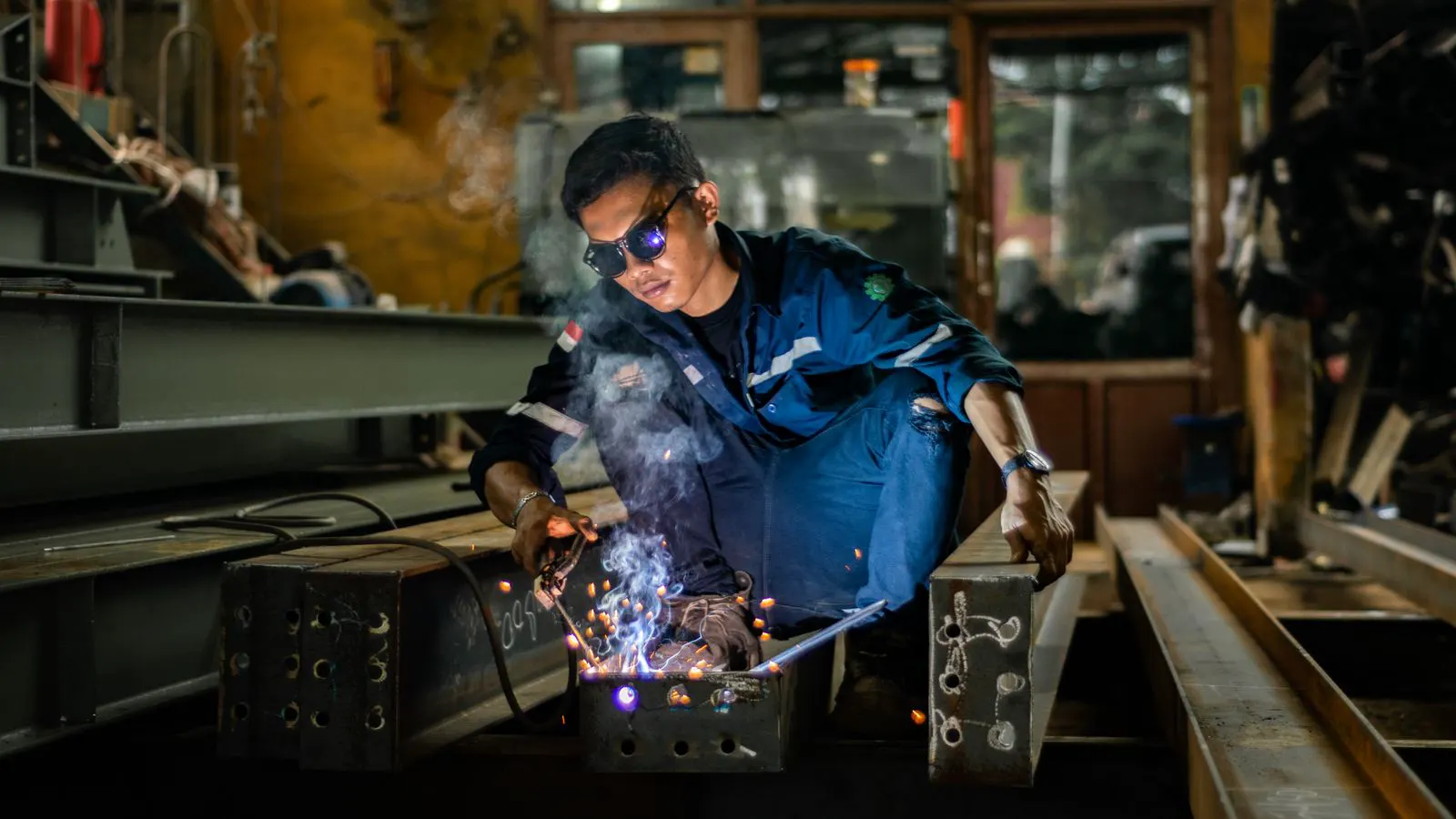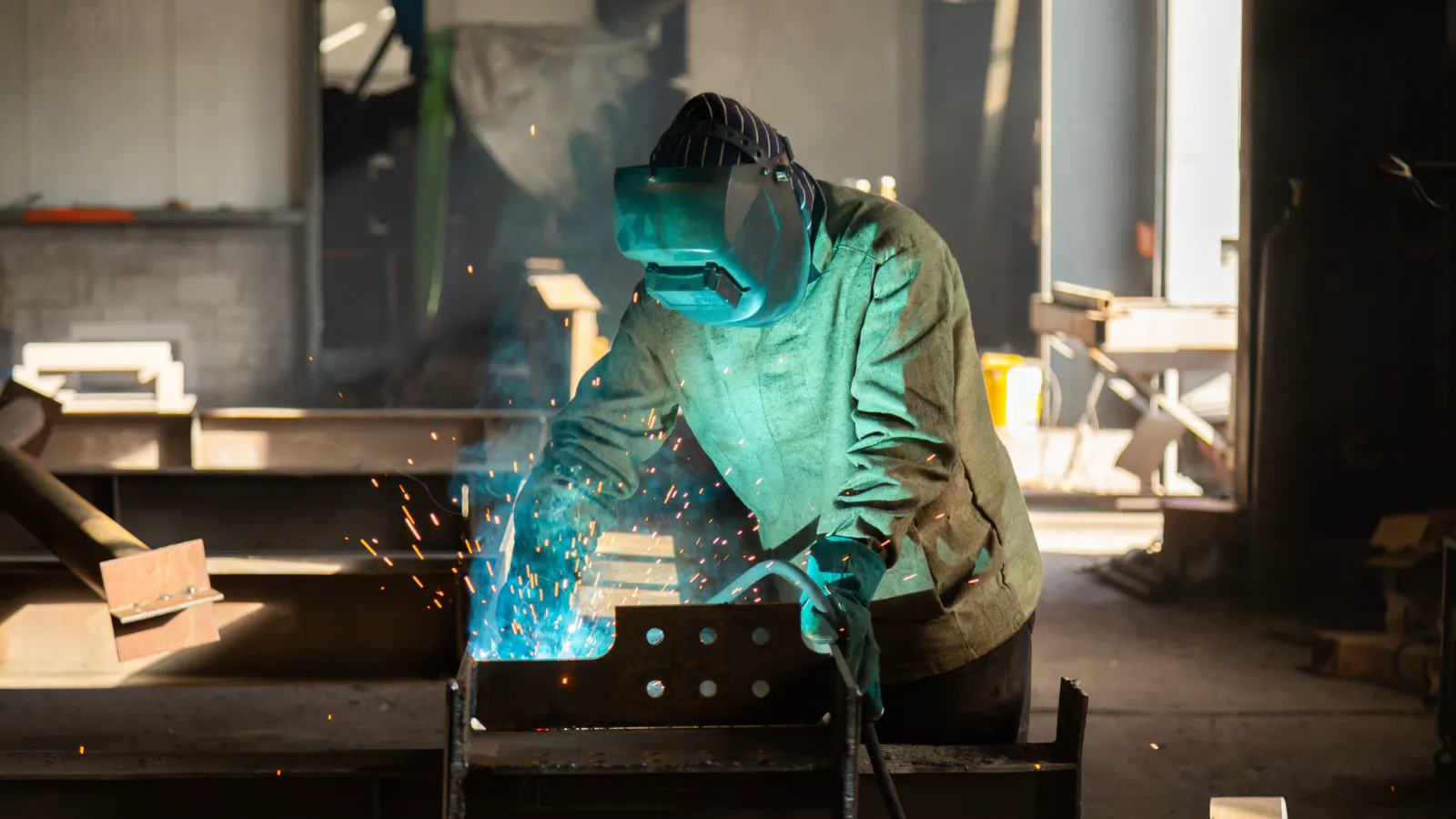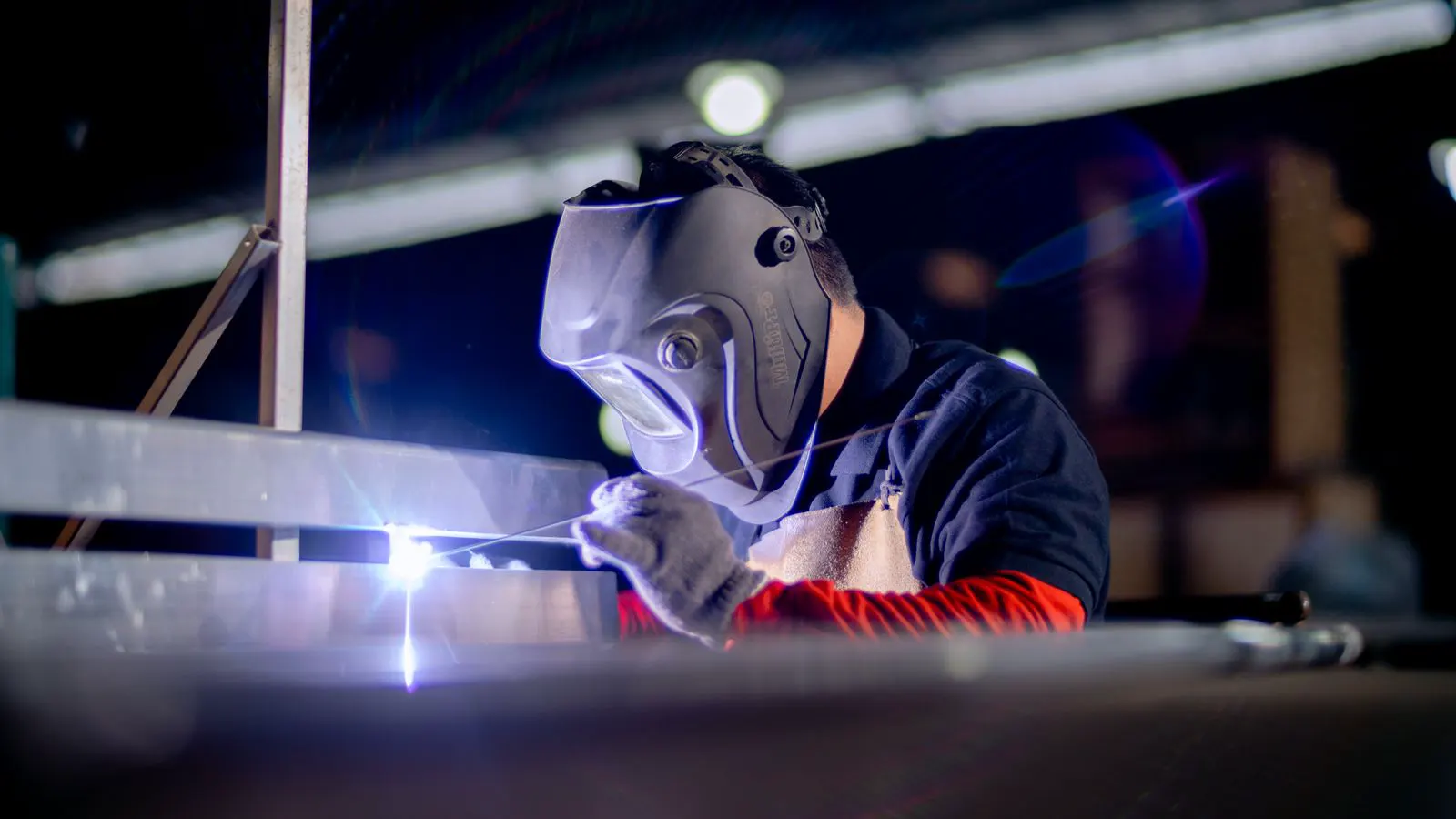
Choose welding safety enclosures by verifying structural integrity, ventilation paths, and access points. These barriers protect the whole team from arc flash, spatter, and fume exposure. Use the criteria below to match barriers to your specific plant layout and welding processes.
- Structural limits must handle heat, spatter, and repeated access without weakening the frame.
- Ventilation and fume extraction must integrate with the enclosure, not just sit beside it.
- Access points should allow quick entry and exit while keeping the barrier sealed.
- Material choice depends on the welding process. Some processes throw more spatter than others.
- A single barrier rarely covers every hazard. Pair enclosures with PPE and engineering controls.
What a welding safety enclosure actually protects
A welding safety enclosure is a physical barrier that separates the arc from the rest of the shop floor. It controls arc flash, spatter, UV radiation, and some fume drift. It does not replace PPE. A welder inside the enclosure still needs a helmet, gloves, and jacket. The enclosure protects the welder from the outside and the outside team from the inside.
Facility managers usually specify these barriers because one welder working in an open bay exposes several other workers. The enclosure creates a controlled zone. It also gives maintenance teams a fixed place to mount fume extraction, lighting, and fire suppression.
The barrier can be permanent or modular. Permanent units bolt to the floor and sit in fixed positions. Modular units roll on casters and reposition between jobs. The choice depends on your layout and how often the welding station changes.
Structural limits and material selection
Check the frame and panels before you buy. The frame should be steel or aluminum, depending on the duty. Steel handles heavy spatter and impact better. Aluminum is lighter and easier to move but can dent if struck by tools or carts.
The panels need to block UV and IR while allowing the welder to see the arc. Some panels are transparent ceramic or polycarbonate. Others use tinted glass. The material must resist heat from the arc without cracking or yellowing over time.
Look for gasket seals around the frame. Gaps let fumes and spatter escape. They also let the worker feel a hot draft. A good seal keeps the interior air cleaner and reduces the need for aggressive fume extraction.
Ventilation and fume extraction integration
The enclosure must work with your fume extraction system. Do not assume a local arm will handle the whole bay. The enclosure changes the airflow pattern. Fumes can collect in corners or behind the frame.
Check where the extraction inlets sit. They should be close to the arc, not at the far edge of the enclosure. If the inlet is too far, the fume path is long and the capture efficiency drops.
Some enclosures come with built-in ductwork. Others require you to mount the extraction unit yourself. Built-in systems save installation time but may cost more. Separate systems give more flexibility.
The extraction system also needs a filter or bag. A clogged filter reduces airflow. Plan for filter replacement. If you weld continuously for many hours, the filter changes more often.
Access points and worker flow
Workers need to enter and exit the enclosure quickly. A slow door or a narrow opening creates a bottleneck. It also invites shortcuts. If the door is hard to open, a welder may leave it ajar.
Choose doors or panels that open fully. Hinged doors swing wide. Sliding doors save space but require a clear track. The opening height should let a worker enter without bending. A worker who has to duck or lift a cart is more likely to make a mistake.
Inside the enclosure, leave room for the welder to move. The workpiece may need repositioning. The welder may need to step back from the arc. If the space is too tight, the worker may lean against the panels.
Add a lock or latch that can be engaged from outside. This prevents a worker from entering while the enclosure is sealed for maintenance. It also stops a cart from rolling into the bay.
Fire and heat management
Welding creates sparks and hot slag. The enclosure floor and walls must handle these without catching fire. Avoid plastic panels near the workpiece. Use non-combustible materials for the lower frame and floor.
Check the spacing between the workpiece and the panels. A thin gap lets a spark hit the panel and melt a hole. A wider gap gives the spark a chance to fall to the floor.
Add a spark screen or a metal mesh over the lower opening. This stops large chunks of slag from escaping. It also protects the floor from direct heat.
The enclosure should not block emergency exits. If the bay is in a large shop, the enclosure must have a clear path to the door. If the bay is in a small room, the enclosure may limit movement. Check your fire code and building layout before you install.
Maintenance and inspection
A welding safety enclosure is not a set-and-forget unit. The frame can corrode. The panels can crack. The gaskets can dry out. The fume extraction can clog.
Make an inspection routine. Check the panels for cracks after each shift. Check the gaskets for wear monthly. Check the fume extraction filter according to the manufacturer’s schedule.
Keep spare panels and gaskets on hand. A cracked panel can be a serious hazard. A welder may not notice the crack until it lets UV through. A broken gasket can let fumes escape into the shop.
Label the enclosure with the last inspection date. This creates a paper trail. It also reminds maintenance when the next check is due.
How to evaluate and choose the right enclosure
Use the criteria below to compare options. Match each criterion to your specific welding processes and layout. Do not buy the cheapest unit. A weak enclosure fails when a welder is inside.
| Criterion | What to look for | Why it matters |
|---|---|---|
| Frame material | Steel or aluminum, with a solid weld | Handles impact and heat without deforming |
| Panel type | UV-blocking ceramic or polycarbonate | Protects from arc flash and spatter |
| Sealing | Continuous gasket around the frame | Keeps fumes and spatter contained |
| Access | Full-height door or sliding panel | Allows quick entry and exit without shortcuts |
| Ventilation | Inlets close to the arc | Captures fumes before they drift |
| Floor protection | Non-combustible floor mat | Stops sparks from igniting nearby materials |
| Maintenance | Easy access to filters and panels | Reduces downtime and inspection time |
Decision checklist
- Identify the welding processes used in the bay. MIG, TIG, and stick welding create different spatter and fume patterns.
- Measure the bay. The enclosure must fit the workpiece and allow the welder to move.
- Check the fume extraction. The inlets must be close to the arc. The filter must handle the expected dust load.
- Review the access points. The door must open fully. The opening must be high enough for a worker to enter without bending.
- Verify the materials. The panels must block UV. The frame must handle heat. The floor must resist sparks.
- Plan the maintenance. Keep spare panels and gaskets. Set a schedule for filter changes and inspections.
- Confirm the emergency exit. The enclosure must not block the path to the shop door.
Common mistakes to avoid
Do not treat the enclosure as a substitute for PPE. The welder inside still needs a helmet, gloves, and jacket. The enclosure protects the team outside and the welder from some outside hazards. It does not cover every risk.
Do not ignore the fume extraction. A sealed enclosure without proper ventilation creates a concentration of fumes. The extraction must be sized for the welding process and the bay size.
Do not choose a unit that is too small. A cramped bay forces the welder to work in an awkward position. It also increases the chance of sparks hitting the panels.
Do not skip the inspection routine. A cracked panel or a clogged filter can become a serious hazard. A short inspection takes minutes and prevents a long shutdown.
Final thoughts
A welding safety enclosure is a physical control. It reduces hazard exposure for the whole team. It works best when paired with PPE, fume extraction, and a maintenance routine.
Select the unit by checking the frame, panels, access, and ventilation. Match the materials to the welding process. Leave room for movement and emergency exit.
Use the criteria table and the checklist to compare options. A well-chosen enclosure protects the welder and the workers around the bay. It also gives your facility a fixed point for managing arc hazards.
Frequently asked questions
Can a welding safety enclosure replace PPE?
No. The enclosure protects the team outside and reduces arc flash inside. The welder still needs a helmet, gloves, and jacket. PPE covers the gaps that a barrier cannot.
How often should I inspect the enclosure?
Check the panels and gaskets after each shift. Do a deeper inspection of the frame, door, and fume extraction monthly. Replace worn parts immediately.
What material should I use for the panels?
Use UV-blocking ceramic or polycarbonate. These materials resist arc flash and spatter. Avoid standard glass, which can crack from heat.
Does the enclosure need a built-in fume extraction?
It depends on the layout. A built-in system saves space and integrates the ductwork. A separate system gives more flexibility. Check the capture distance before you decide.
Can I move the enclosure between jobs?
Yes, if you choose a modular unit on casters. Make sure the floor is level and the casters lock. A mobile unit still needs the same maintenance as a permanent one.