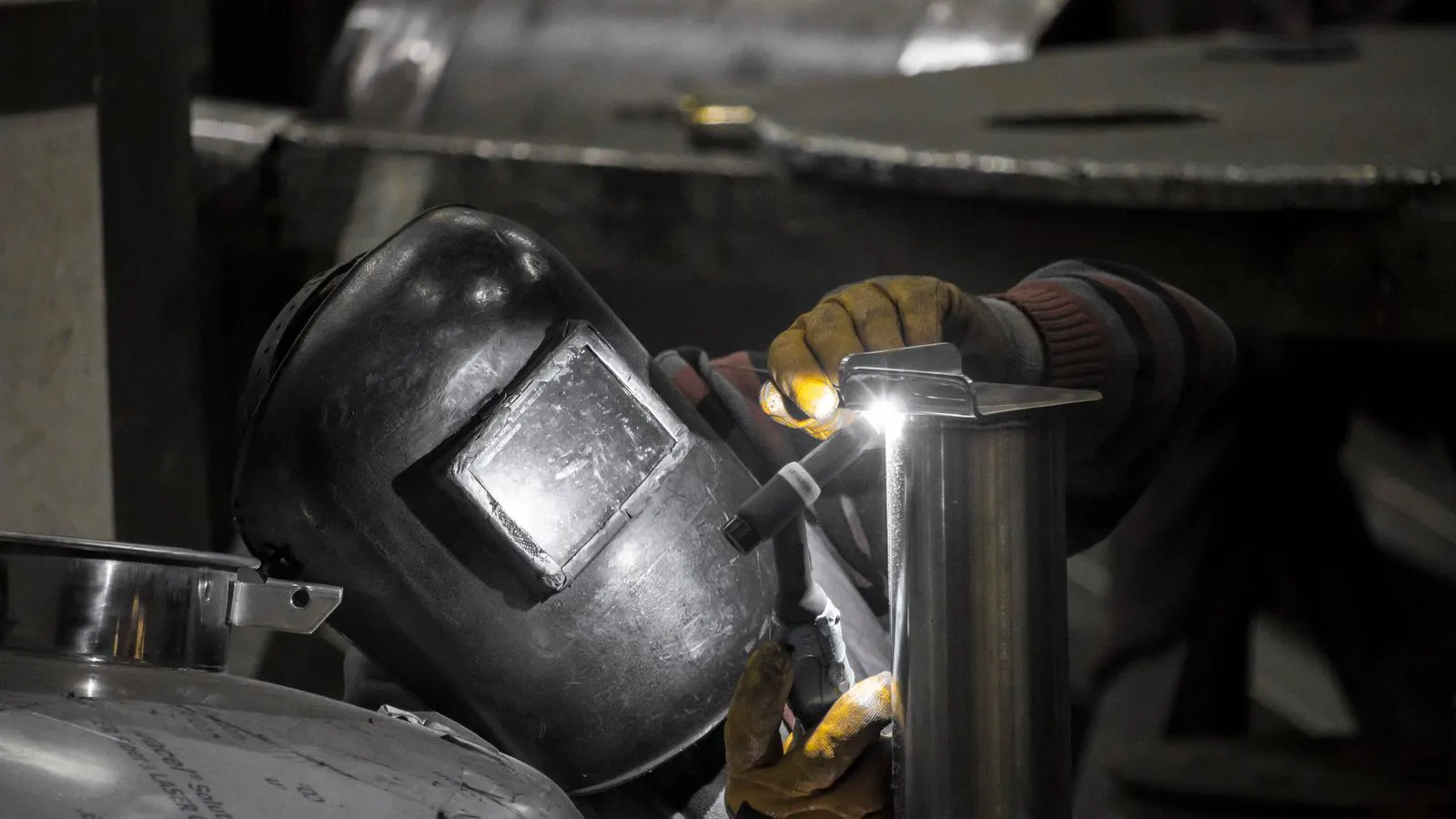
Select a TIG machine by matching amperage, duty cycle, and control type to your metal thickness and joint types. Then choose a torch that matches your work position and gas flow needs.
- Match amperage and duty cycle to the thickest workpiece you plan to weld regularly.
- Choose AC or DC based on the metal type: aluminum needs AC, steel and stainless usually need DC.
- Pick a torch that fits your work position, joint access, and gas flow requirements.
- Check control methods like pulse, soft start, and hot start for clean startup and repeatability.
- Test the torch body, tip, and gas lens for durability and ease of replacement.
What power source specs should you prioritize?
Start with amperage. The machine must produce enough current to melt the joint at your typical material thickness. A source that maxes out at 120 amps will struggle with thick plate, while a 300 amp unit may be overkill for light sheet work. Match the output to the heaviest section you expect to weld.
Next, check the duty cycle. This is the percentage of time a machine can operate at a set amperage before overheating. A 60 percent duty cycle at 150 amps means the machine can sustain that current for three minutes, then needs a cool down. For production lines or repetitive work, a higher duty cycle reduces downtime. For occasional repair work, a lower duty cycle is acceptable.
The control type matters next. DC power is standard for steel and stainless. AC power is required for aluminum because the alternating current cleans the oxide layer as it melts. Many professional TIG power sources offer both. Some also include AC balance adjustment, which lets you tune the cleaning action.
How do you choose between AC and DC TIG machines?
The metal you weld decides the current type. Steel and stainless steel weld well on DC. Aluminum, copper, and some nonferrous alloys require AC. If your shop handles mixed metals, a dual AC DC source saves space and simplifies setup.
AC TIG has a distinct cleaning cycle. The negative half of the cycle melts the metal. The positive half breaks up oxide. If the balance is set wrong, the weld may look spotty or the tungsten may erode. A good AC source gives you a dial or knob to adjust this ratio.
DC TIG offers a stable arc and a cleaner start. For steel, this is usually the better choice. DC negative polarity is the standard for thick section work. DC positive is used for some thin sheet and copper. Check the polarity setting before you start.
How do you evaluate control options for precision TIG equipment?
Control options determine how you shape the heat input. Soft start lowers the current gradually at the beginning of the arc. This prevents spatter and helps with thin material. Hard start jumps to full current, which is faster but rougher.
Hot start preheats the tungsten before striking the arc. This reduces tungsten contamination and shortens ignition time. It is a useful feature for long production runs.
Pulse control varies the current in a controlled rhythm. This keeps the pool small and reduces distortion. It is useful for thin sheet, dissimilar metals, and work where heat control is tight. Pulse frequency and width settings let you tune the effect.
Foot pedal control is a practical option. It lets you vary amperage without leaving the joint. This is common in sheet metal and automotive work. A simple dial is faster for fixed amperage jobs. Choose based on how you actually move through a weld.
What torch features fit professional TIG work?
The torch body must match your work position. A straight torch is easy to hold for flat and horizontal joints. A flexible torch helps with vertical and overhead work. A short neck torch reaches into tight spaces.
The tip size sets the gas flow and arc stability. A larger tip allows more gas and a wider protective envelope. It suits thicker sections and higher amperage. A smaller tip is lighter and works well for thin material. Match the tip to the torch body and the joint.
The gas lens protects the tip and tungsten from debris. It is replaceable and should be checked often. A clogged lens changes the gas pattern and can cause porosity. Keep a spare in the shop.
The contact tip and tungsten holder must align cleanly. A loose holder causes arc wander and inconsistent heat. A well-made torch has a tight, smooth fit. You should be able to insert and remove the holder quickly without dropping the tungsten.
How do you match the torch to your gas and material?
Argon is the standard TIG gas. It is inert and protects the molten pool. For thicker sections or windier environments, add a small amount of helium. Helium raises the arc energy and helps with deeper penetration.
For stainless steel, pure argon works well. For aluminum, pure argon is also common. Some shops use a helium argon mix for heavier aluminum. The gas flow rate matters. Too much gas causes turbulence and draws in air. Too little leaves the pool exposed. Start with a moderate flow and adjust based on conditions.
The joint type also affects the choice. A butt joint needs even heat. A fillet joint needs a narrower pool. A T joint may need more travel speed. The torch tip size and gas lens help you control the heat zone.
What accessories should you include with a new TIG setup?
A TIG setup needs more than the machine. You need a foot pedal or dial, a ground clamp, and a proper cable set. The cable size should match the amperage and run length. Thin cables overheat and increase voltage drop.
Tungsten electrodes are consumables. Choose the correct material and size. For DC steel work, a 1/16 inch tungsten is common. For AC aluminum, a 3/32 inch tungsten with a proper grinding tip is typical. Keep a small selection on hand.
The gas nozzle and lens are part of the torch. A damaged lens or a worn tip changes the gas flow. Inspect them before each shift. Replace them when you see wear or discoloration.
A wire brush or nonabrasive pad helps clean the joint before welding. Oxide and oil cause porosity. A clean joint is a clean weld.
What mistakes to avoid when buying a TIG welder?
Do not buy based on amperage alone. A high amperage machine is not the right machine for every job. A low duty cycle machine is not suitable for long production runs.
Do not ignore the control type. A DC only machine will not handle aluminum. An AC machine without balance adjustment may be harder to tune.
Do not skip the torch quality. A cheap torch with a loose holder and a short gas lens will cause more problems than the machine itself. The torch is the tool you touch every second of the weld.
Do not assume the gas bottle is the whole story. The regulator, hose, and torch tip all affect flow. A bad hose connection leaks gas and ruins the weld.
Decision checklist
- List the metals you weld: steel, stainless, aluminum, or mixed.
- Identify the thickest section you will weld regularly.
- Choose AC, DC, or dual based on that list.
- Set the duty cycle target based on your production pace.
- Pick control features: soft start, hot start, pulse, foot pedal.
- Select a torch body for your work position.
- Match the tip and lens to the joint and gas.
- Verify cable size and ground clamp quality.
- Confirm tungsten and consumable availability.
- Test the machine and torch on a scrap joint before committing.
| Criterion | What to look for | Why it matters |
|---|---|---|
| Amperage range | 80 to 300 amps for most professional work | Covers thin sheet to medium plate without overbuying |
| Duty cycle | 60 percent at mid amperage for production | Keeps the machine cool during long runs |
| Control type | DC for steel, AC for aluminum, dual for mixed | Matches the current type to the metal |
| Pulse control | Adjustable frequency and width | Reduces heat input and distortion |
| Torch body | Straight, flexible, or short neck based on position | Fits the joint and work angle |
| Tip size | 1/8 inch to 1/4 inch depending on amperage | Controls gas flow and arc stability |
| Gas lens | Replaceable and easy to clean | Protects the tip and keeps the gas pattern |
| Foot pedal | Linear or step response for amperage control | Lets you vary heat without leaving the joint |
| Cable size | Matches amperage and run length | Prevents overheating and voltage drop |
| Consumables | Tungsten, tip, lens, and gas available | Keeps the setup running without delays |
Frequently asked questions
What amperage do I need for TIG welding?
Start with the material thickness. Thin sheet may need 50 to 100 amps. Medium plate can need 150 to 250 amps. Choose a machine with a range that covers your thickest work.
Do I need a dual AC DC TIG welder?
Yes, if you weld both steel and aluminum. A dual source handles both metals in one unit. If you only weld steel, a DC source is enough.
What is the best torch for overhead TIG?
A flexible torch with a short neck helps. It lets you hold the torch close to the joint and move freely. A straight torch is harder to hold for long overhead passes.
How do I know if my gas flow is too high?
Watch the arc. If you see swirling or a puffy gas pattern, the flow is too high. Reduce the flow until the arc stays stable and the pool is protected.
Can I use a plasma torch for TIG work?
No. Plasma and TIG use different processes. A plasma torch cuts and welds with a different arc and gas setup. A TIG torch is built for precise, low heat input.